Co je axolotl a proč po něm děti tak šílí
Umí si dorůst nohu, tváří se, jako by se usmíval, a děti ho znají dřív, než zjistí, že je skutečný. Odkud se vzala jeho sláva a co vědět, než ho pořídíte domů.
If you have a child between six and twelve at home, you’ve probably heard the word axolotl already. And maybe you weren’t quite sure what it actually is.
For us it has long been the most popular animal in our whole range, so we know a thing or two about it. Here’s what’s worth knowing.
It’s an amphibian, not a fish
The Mexican axolotl lives in what’s left of the lakes near Mexico City. It’s related to the salamander, but unlike it, it spends its whole life in water and never changes into a land form. In a way, it stays a baby forever.
Those feathery tufts on the sides of its head that look like decoration are external gills. That’s how it breathes.
It can regrow a limb
This is what makes it famous even among scientists. When an axolotl loses a leg, it grows a new one. Bones, muscles and nerves included, and without a scar.
It can even do this with parts of its heart, lungs and brain. That’s why scientists all over the world study it to learn about tissue regeneration.
For kids, this one fact is usually enough to make the axolotl the best animal in the world. And honestly, we get it.
That smile is an accident
An axolotl looks like it’s smiling all the time. It isn’t an expression, just the shape of its mouth. It isn’t feeling anything, and it doesn’t mean a thing.
But that’s exactly what makes it so popular. Its face ticks all the boxes the human brain loves: a big head, big eyes and soft features.
It’s almost extinct in the wild
This is the sad part. Only a few hundred are left in the lakes near Mexico City. The lakes are drying up, getting polluted, and are full of introduced fish that eat axolotl babies.
The paradox is that tens of thousands of them live in aquariums and labs. The species as such won’t die out, but in the wild it has almost disappeared.
Why kids love it so much
The biggest boost came from Minecraft, where the axolotl appeared as an animal you can catch and that helps the player. From there it spread to social media, nurseries and schools.
Today kids know it before they even find out it’s real.
Want one at home? Think it over
A live axolotl is a demanding pet. It needs cool water of around eighteen degrees, which means a chiller, a roomy aquarium and regular care. It doesn’t like sharing its tank with other fish and copes very badly with poor conditions.
It’s not an animal for a child who wants to cuddle it. It’s an animal to watch, and above all one for a parent who is happy to look after the aquarium.
Our version
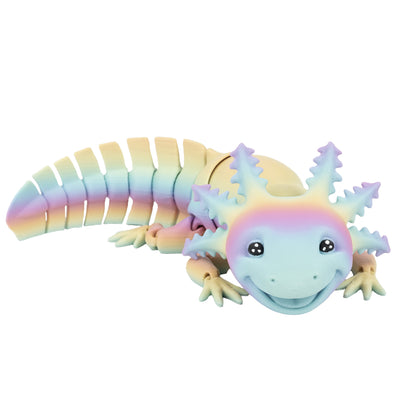
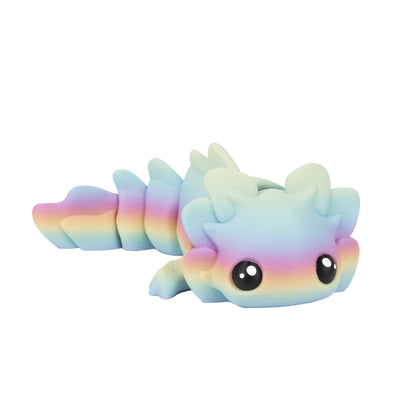
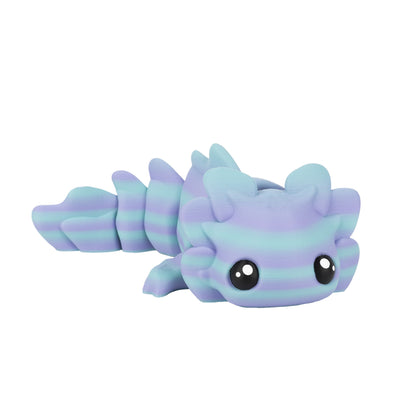
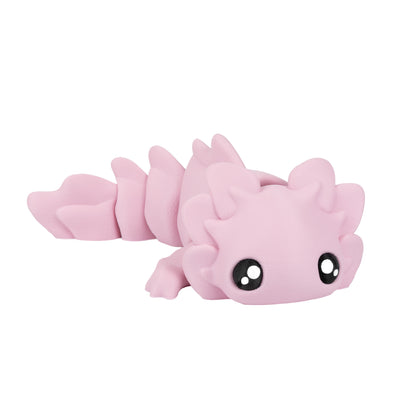
We make flexi axolotls on our 3D printers. The body and tail bend, so you can make them wiggle as if they were swimming, and the external gills are printed right into the model.
We make them in two sizes and in colors ranging from soft pink to pastel rainbow and glow-in-the-dark versions. We print from PLA made from corn or potato starch, and every piece is finished by hand in our workshop. CE certified, suitable for ages 3+.
And one last thing: despite looking like a water creature, it doesn’t belong in water.
Prev post
Dárek pro kluka 6 až 10 let: 12 tipů, které vydrží déle než týden
Updated on 11 October 2026
Next post
Dárky do 500 Kč: když chcete dítě potěšit o něco víc
Updated on 11 October 2026